Beneath the Lyrics: No One Mourns the Wicked

[Spoilers Ahead for Wicked and Wicked: For Good]
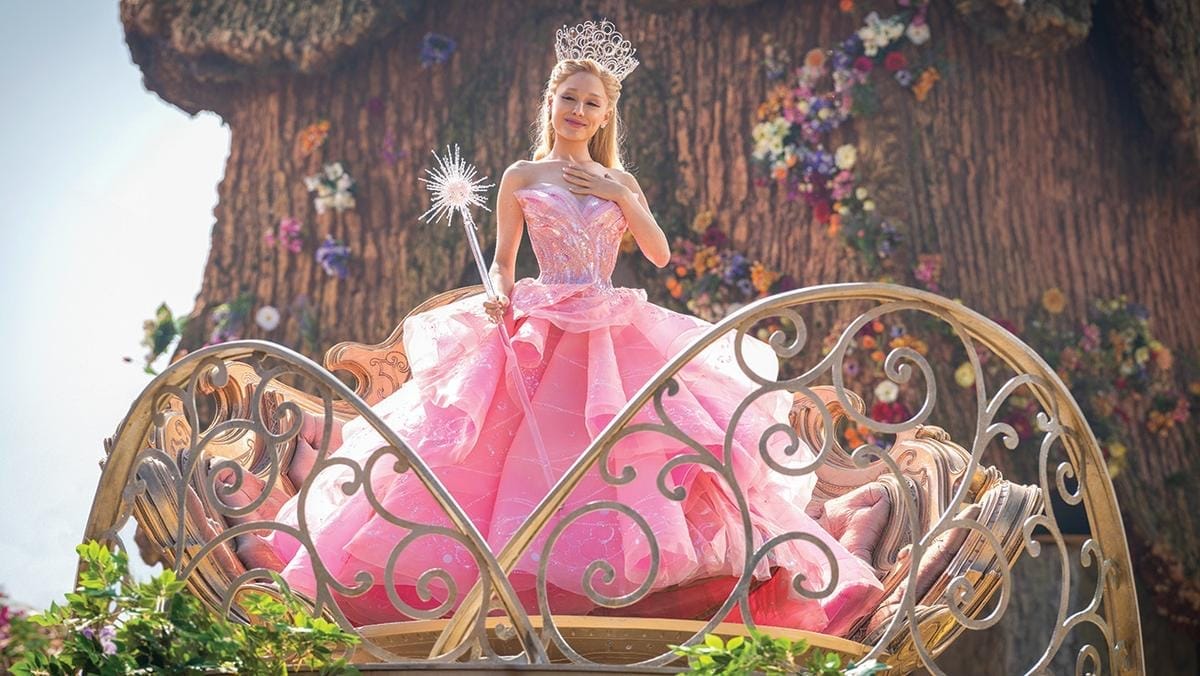
The land of Oz is no stranger to deep truths and double meanings. Whether it’s the mistaken worldviews that sustain the Emerald City, or the hidden morality behind the witches, wizards, and sorcerers that keep the peace, or the despicable prejudice shown against anyone even remotely ‘different’, the list stretches as long as the Yellow Brick Road. Yet perhaps one of the most unexpected of these truths is teased to us by the shining face of goodness herself, Glinda ‘the Good’.
At face value, No One Mourns the Wicked is just a bombastic musical opener. We meet our main characters, learn about the nature of the culture, and jump straight into the complex narrative conflict that makes Wicked so appealing. Yet, what if we go a step further. What if Glinda isn’t really singing on the wickedness of her late friend, Elphaba, but instead of her own moral impurity?
Glinda: Polish and Pretense
(*NOTE: For the sake of context, I’d suggest reading my other Wicked post, Smoke and Bubbles: The Intertwined Struggles of Elphaba and Glinda before going on with this one.)
As I’ve spoken about before, Glinda’s sense of self is directly tied to the views of those around her. She tends to only show the ‘best’ of herself, or, more accurately, she only shows what others want to see. And indeed it’s her very nature of pleasing others that places her at the pinnacle of influence in Oz, becoming the glittery image of moral uprightness. And yet, as we can learn from the song Thank Goodness / Couldn’t Be Happier in Wicked: For Good, Glinda doesn’t fully see herself as ‘good’ as everyone else does. She knows the truth: She’s a fraud. Just like the Wizard and Madame Morrible, she dons a counterfeit persona, hiding her true self within her own personal bubble.
But, unlike the Wizard and Morrible, she feels a sense of guilt in knowing the truth behind her image. She doesn’t inherently want to hide her true self, but she, at the same time, can’t bear the thought of the world knowing the true Glinda, and how she, like Elphaba, is morally opposed to the Wizard. But, unlike her friend, she can’t bring herself to act on her beliefs. And Glinda’s shifting views of herself are explored even more with the original song The Girl in the Bubble, in Wicked: For Good. There she remarks how,
“Look. There's that beautiful girl, with the beautiful life. Such a beautiful life built on lies. 'Cause all that's required to live in a dream is endlessly closing your eyes.”
This shows how, despite the outward praise bestowed from all those around her, she herself knows the bitter truth that it’s all a ruse, a facade, a trick. None of it is true, it’s as made-up as her magic. And, as much as she may want to be ‘good’ and ‘wonderful’, she knows, deep down, she isn’t. She stands for ideals that she herself is opposed to, yet she can’t bear the thought of going against the opinion of those she seeks validation and purpose from. So she stays within her little bubble, too scared to show her true self.
Elphaba knew her beliefs, and, when challenged to follow the world around her or to stand against the popular opinion, she stepped out, exiling herself from all of Oz. Yet, she was free.
And, when Glinda is faced with a similar choice, she instead stumbles backwards, retreating to her safe space, causing her to be exalted as ‘Glinda the Good’, earning her glory and love beyond imagination. Yet, she wasn’t free.
Deep down, Glinda knows that she’s the true ‘wicked witch’, not Elphaba.
By hiding behind her glittering image, she entrapped herself, bound by social expectations, unable to speak or act against what she now stands for. Whether she agrees with Oz’s worldviews or not, she finds herself forced to uphold righteousness as the shining face of goodness.
But, if the very foundations upon which the social norm are they themselves faulty and unreal, then what good is anything built upon it? If the entire culture’s beliefs on ‘good’ and ‘wicked’ are wrong, where does that leave us? That brings us to realize the truth: Elphaba is not the ‘wicked’ one. In fact, she‘s more ‘good’ than anyone in all of Oz.
Popping the Bubble
By the final stretches of the second film, Glinda begins to accept that she isn’t as ‘good’ as she or others made her out to be. In reality, she is one of the most ‘wicked’, cowering beneath the pressure of others and slinking back, too afraid to express her true feelings. She embraces the bitter truth: She’s wicked, through and through.
Her new perspective influences her every action from that point onward, from her reconciling with her long lost friend Elphaba, to her reformation of the Emerald City and its figureheads (resulting in Madame Morrible’s imprisonment and the Wizard’s departure), and her bittersweet news to the Munchkins of the death of ‘the Wicked Witch of the West’.
Her lines in No One Mourns the Wicked seem to reflect her inner struggle and growth, as one can clearly see if they dare to dig deeper into self-righteousness and identity. She proclaims boldly yet sorrowfully that,
And goodness knows the wicked's lives are lonely. Goodness knows the wicked die alone. It just shows, when you're wicked, you're left only on your own.
And notice how, unlike the rest of the movie, Glinda is the first to sing these lyrics, not the Munchkins. Rather than just nodding and going along with their arrogant declarations of the miserable solitude of the wicked, she instead speaks this truth alone. And, seeing as how she is one of the few who understands the truth between Elphaba’s time as the “Wicked Witch of the West”, she couldn’t be singing about her friend, especially after her sacrificial death. No, she must be referring to someone else.
The dark truth is how we can apply this to Glinda’s own journey over the past years as the glimmering ‘Glinda the Good’. She, having lived in the faulty lines of society, failed to stand for her own ideals. She became wicked, outright promoting injustice and cruelty. As she comes to grip with her failings, she knows that she herself, the ‘wicked’ one, will die alone. No Elphaba or Fiyero, no Boq or Nessa, nobody. All of her friends are gone, either dead or moved on, leaving her by herself forever.
And she doesn’t fight it. She merely embraces her wickedness.
Earlier on, if you put herself in the position of ‘evil’, the meaning of these lines grow even more powerful:
Isn't it nice to know that good will conquer evil? The truth we all believe’ll by and by outlive a lie.
If here she means herself as the ‘evil’ that is to be conquered, we can take away how she knows that, despite her wicked actions prior, she herself believes that the ‘good’ has finally overcome her own falsity. Thanks to the good deeds of Elphaba, she knows, deep down, that she has indeed been changed ‘for the better’. Her true self and her faulty persona, constantly pushing and pushing her to the brink of herself, have finally ceased. The truth has outlived her falsehoods, brining her true self into the light.
She stops trying to simply appear as if she‘s good; she begins to try to live ‘good’. She‘s done with pretending she’s purely wonderful, instead accepting that she, as we all are, is both made of ‘good’ and ‘wicked’, flawed yet beautiful. She doesn’t excuse her flaws, however. She instead admits she is imperfectly human, and still tries her best to be the best she can be. This reflects her growth from polished people-pleaser to reformed face of righteousness.
“I’d like to try to be Glinda the Good.”
And this time, we can believe her.
Closing Thoughts
Welcome to the end! If you enjoyed my analysis or want to share your own take on Glinda’s inner struggles, feel free to comment below. Until next time!